


Note: my studio sale is going for a few more weeks! Thank you to everyone who has shown me support and love by purchasing a piece. We are working on shipping and fulfillment. Check out what I have on sale if you have not done so already by clicking on this paragraph!
The human soul is hungry for beauty; we seek it everywhere—in landscape, music, art, clothes, furniture, gardening, companionship, love, religion and in ourselves. No-one would desire not to be beautiful. When we experience the Beautiful, there is a sense of homecoming.
—John O’Donohue
Students often ask, “why isn’t art beautiful any more?” Journals like First Things or Mere Orthodoxy often claim our world is being made ugly on purpose. Yet, I am hesitant to address beauty and art.
Why am I hesitant to talk about beauty?
Beauty is a sore subject for me. Trying to talk about beauty often feels like this:
Another Lingering Discourse on Beauty, 2005
By Dan Callis
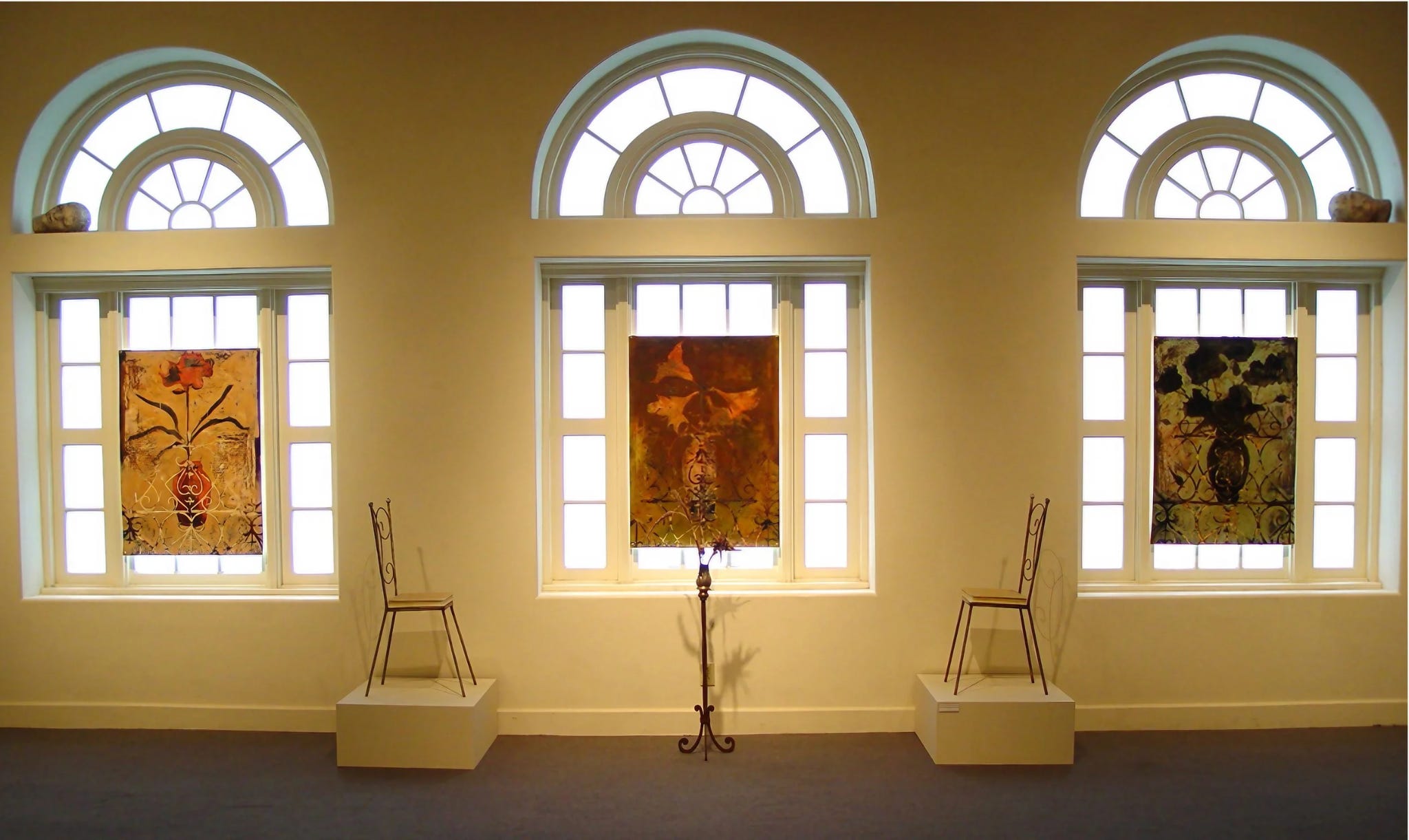
This installation by Dan Callis, whom I posted about two weeks ago and whose catalogue is now on sale, encapsulates my experience. I was in a great books program during undergraduate which was dominated by the Platonic notion of beauty.1 Callis was one of my art professors and he was party to the sort of discussions Christians were having about beauty at the university.
His response to these conversations was the installation above. Severed heads floating above actual particulars, leaving behind empty chairs. I think it sums up the discourse quite well. The ideas were floating way up high and they were most definitely disconnected from any bodies down below.
Fast forward to just a few weeks ago and this sort of dialogue is happening all over the internet. Christians are frustrated—rightfully so—about the ugliness of our contemporary world. A decontextualized Dostoyevsky quote is flung around, “beauty will save the world.” Great art and architecture of the past is placed in click bait optimized juxtaposition condemning our “modern” aesthetics while pining for the glory days of the beautiful past.
My past has caught up with me.
As a necessary act of humility I must ask myself:
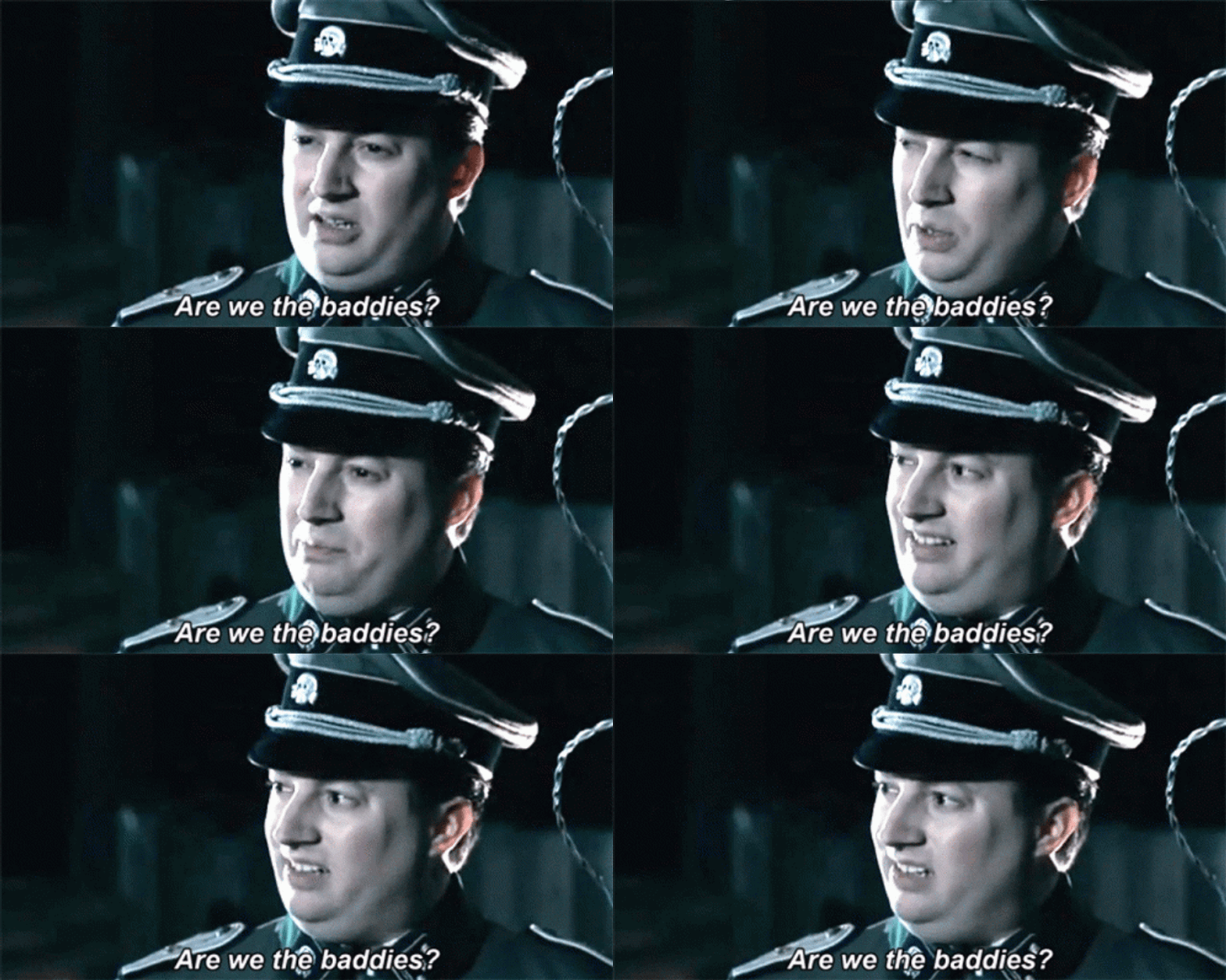
Or in my case, “am I the baddie?” If every thinking Christian under the sun is condemning the perceived ugliness of today, what makes me think I am right and they are wrong?
First of all, it’s not every Christian. But it’s lots and lots of them.
Second, can I really say it’s unreasonable to expect art to be beautiful? It seems to me this is the real complaint. Christians are looking around at a world running headlong into the arms of the Matrix (Yes, the actual Matrix. People want to upload their minds to a computer to defeat death.) and they are wondering, “Where has all the beauty gone?” as they see paintings like this of Jenny Saville’s:
Focus, 2022-24
By Jenny Saville
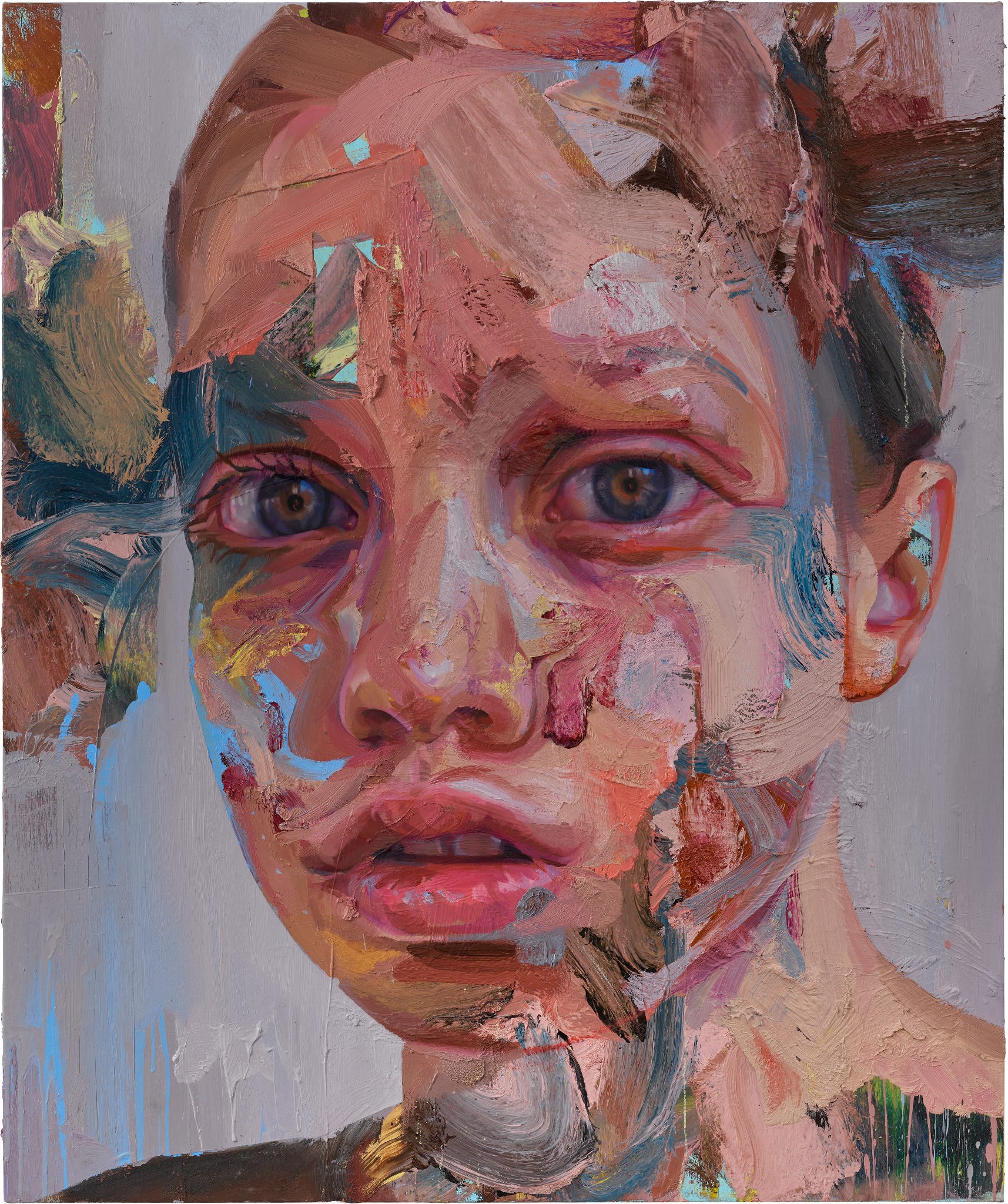
And this is one of Saville’s tamer images.
I am not going to push my glasses higher up my nose and utter, “um actually, this is beautiful.” No. The groaning Christians are right. Art isn’t beautiful very often these days.
In fact, one of my first and most memorable experiences in grad school was when my advisor asked a group of twenty or so of my fellow burgeoning artists, “what is art?” – and let us loose for three hours. At the end of the time, after many of us had waxed not-so-poetically, he pointed out that over the course of the conversation the word “beauty” was not invoked even once.
I believe there are many historic reasons for this, which I have written about previously, I will not rehash those thoughts here. Suffice to say, artists in the 20th century were not concerned with beauty, given the sheer horror the century brought to bear.
A quick example is Picasso:
Guernica, 1937
By Pablo Picasso
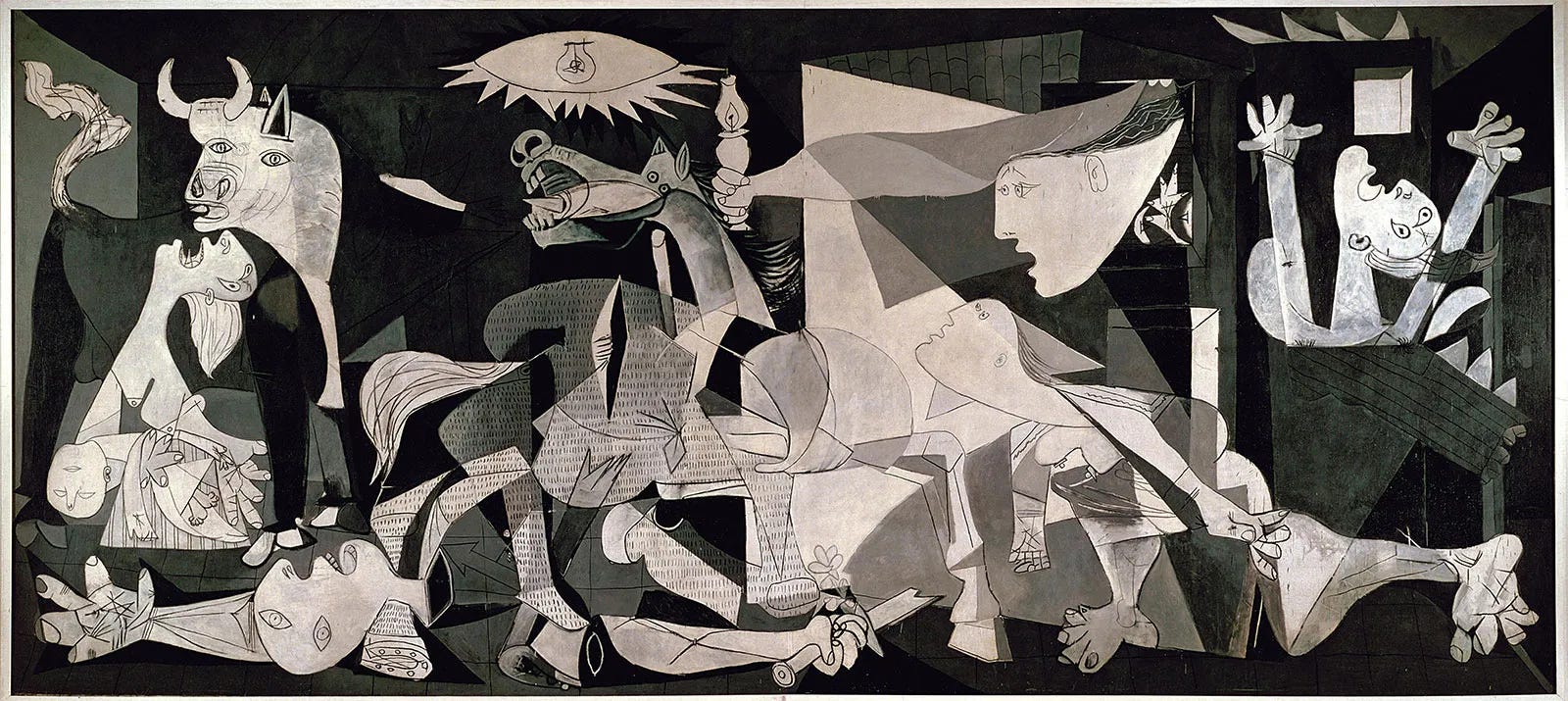
Picasso, when asked by a Nazi SS officer if he made this painting, responded, “No, you did.”
You might look back at the Jenny Saville painting and ask her, “why did you do this to this woman’s face?” I think she could be justified to answer, “I didn’t do this, our cellphones did.”
So, perhaps there are good reasons to make ugly art today, but aren’t there good reasons to make beautiful art as well?
Absolutely! If you live in the northern hemisphere then spring is springing and life is emerging everywhere. If this alone does not merit a joyful noise, then nothing will. In fact, even designers like Stefan Sagmeister and Jessica Walsh are fed up with our ugly world. They express it well in a strange amalgamation of ASMR, ooze, 3D CGI, and beautiful typography:
In the 20th century many folks championed the notion of beauty being “in the eye of the beholder.” Which, if true, would mean that beauty is relative and therefore art need not consider it. I am not one who believes the phrase “beauty is in the eye of the beholder.” Still, I balk.2
I balk because I always have one question whenever folks start talking about beauty and bemoan/condemn contemporary art:
What do you mean by beauty?
Or, in the form of a demand: define beauty.
This is where the majority of conversations go off the rails. More often than not people settle for the poor definition Justice Potter Stewart used to define pornography: “...I know it when I see it…”
Which, in the context of beauty—and also in the context of pornography—amounts to the same thing as saying, “beauty is in the eye of the beholder.”
There seems to be an inevitable return to this notion of the beholder when it comes to beauty. But this phrase rests on a foundation of subjectivity. As in, beauty is subjective which is another way of saying: relative. Christians do not like the notion that beauty is relative so they turn to philosophers for their definitions. Which leads us to this school of thought:
The School of Athens, 1511
By Raphael
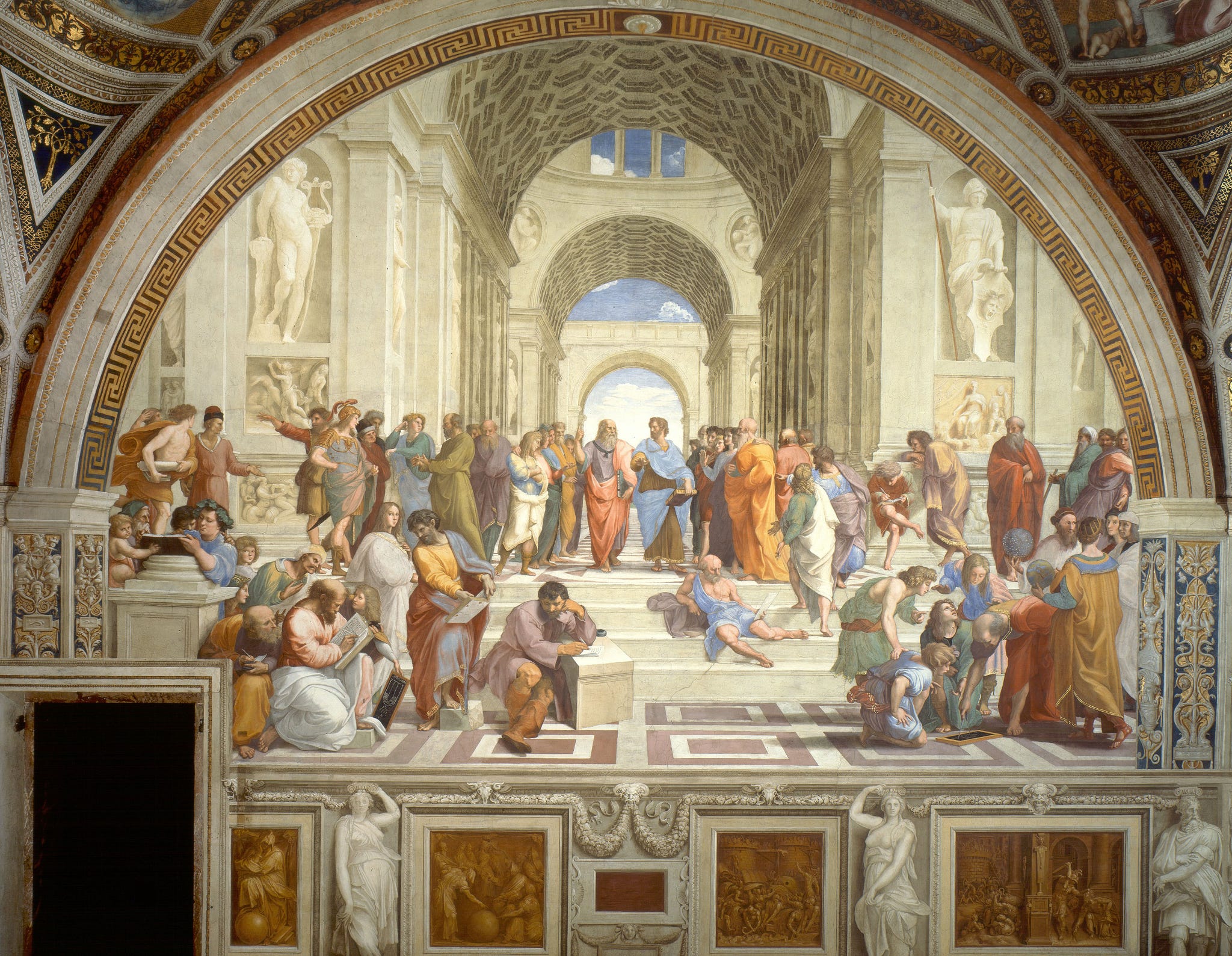
There are three definitions commonly used which are derived from philosophers mulling over the works of the men images above:
Beauty is when something has a perfect form.
Beauty is when form perfectly and elegantly serves function.
Beauty is God’s patterns seen in creation.
I will run through them and, as an artist and Christian, express why I don’t like these definitions:
Beauty is when something has a perfect form.
