


I have begun writing this article on a feast day — Lent isn’t only fasting and somber attitudes. Last week had two feast days, St. Patrick’s and St. Joseph’s, and this week had one!
Saint’s feast days are spread all throughout the year but I notice them more during Lent because of the contrast. Because of the little joy in being able to break a fast early. But feasts during Lent also feel a bit odd. I am reminded of this wall drawing by Ethan Murrow:
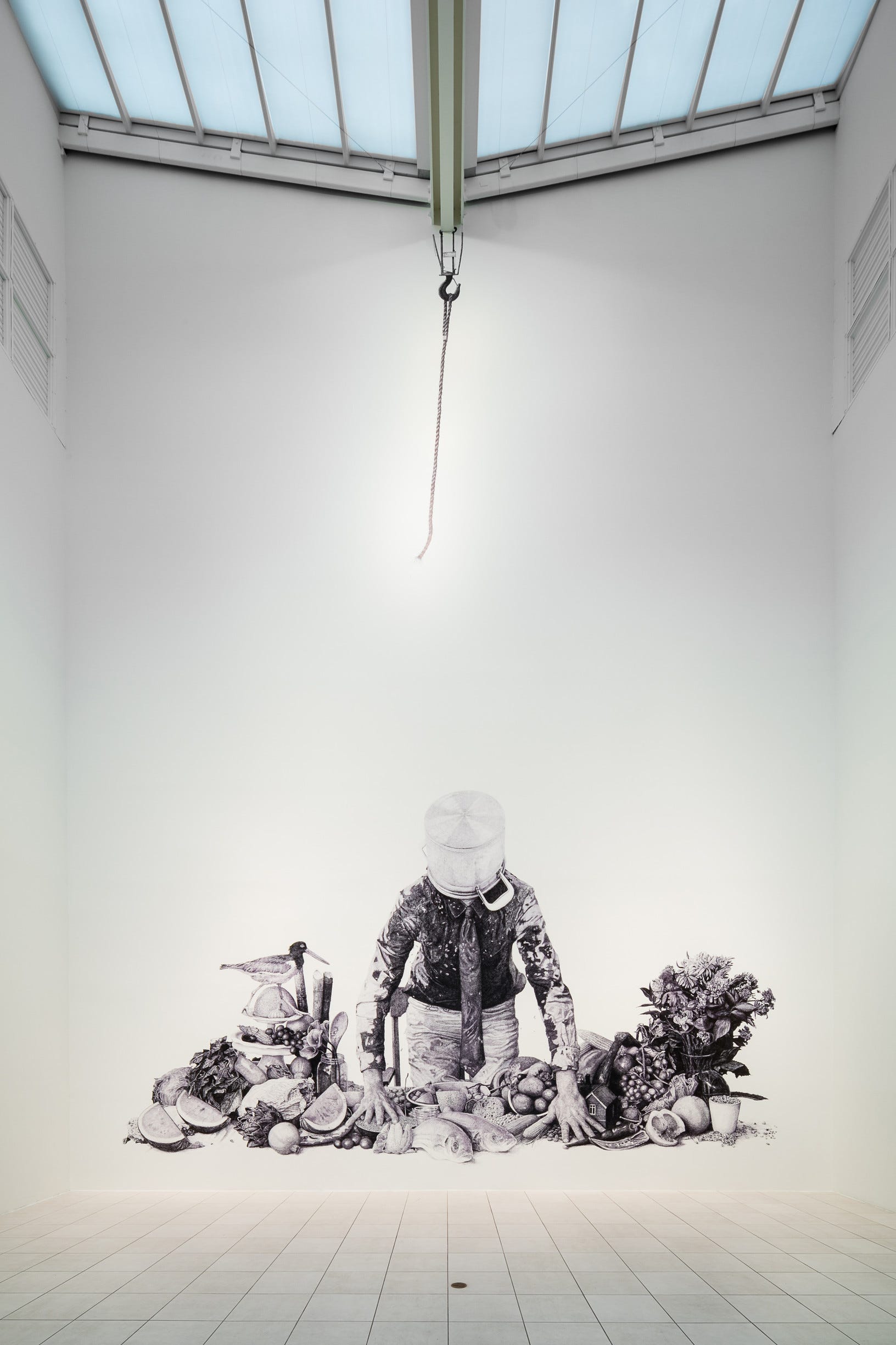
Murrow’s mural is a still-life feast filled with all the trappings of a Martha Stewart cornucopia, plus the inclusion of a figure. An imposing figure at that; reaching over the table laying claim to the bounty. Scroll back up and look at the top of the wall drawing.
The hook and rope were drawn as well. The pot has plummeted, covering the man in what I imagine is chili. The hoarding figure becomes a fool. The tension between sustenance and opulence is as in-your-face as the stock pot which covers his.
Today, during Lent, I feel like a pot of feasting has been spilled on me by accident. Is this because I live in a culture where every meal is basically a feast?
American eating habits always remind me of Stefan Sagmeister’s poster/performance art:
Binge, 2003
by Stefan Sagmeister
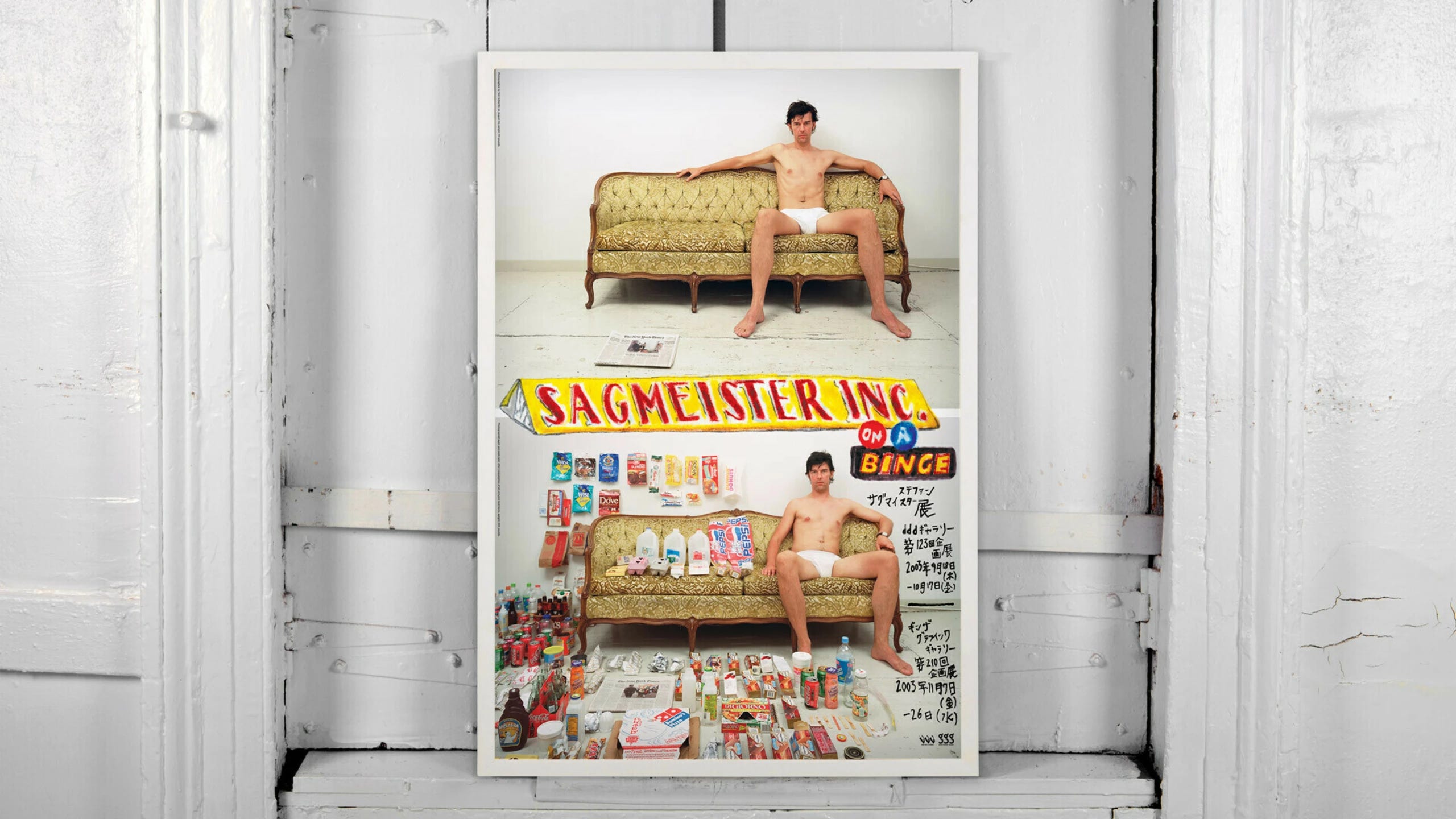
Sagmeister locked himself in a room full of junk food and ate everything over the course of a week. He gained 25 pounds. You can see it on his body. His website says it was, “Not an enjoyable binge.”
Is Lent supposed to make me more conscious of how I feast? Even conscious of what I feast on?
Feasting during Lent seems to bring out more guilt than joy! Some might argue that is the point of Lent — focusing on guilt and the need for grace. It’s at least one of the points. Here is another artwork which wrestles with the excesses of feasting and the guilt often felt when extravagant sensual experiences are enjoyed:
In brief, a French chef serves a group of Danish puritans a lavish feast. At first they religiously vow to withhold all sense of enjoyment but as the courses keep coming, as the wine keeps flowing, as a well cultured general keeps complimenting the food, their hard puritan shells begins to crack.
My favorite moment is when one of the elderly women takes a sip of water and is unsatisfied with it compared to amazing wine at hand. But the beauty of the feast mends old wounds as lips, which hardly speak otherwise, utter confessions and forgiveness given in exchange. Joy is not only tasted, it spreads to all. A fracturing community ends in song holding hands around the village well.
So should I feel guilty about my privileged American feasting in a season of withholding?
The first year my wife and I lived in Boston we had a lavish meal. We traveled to New York for the first time together to celebrate our wedding anniversary. We visited the MoMA and saw the Water Lilies. For dinner, we spent way to much money on a meal. For us, it was a special occasion, our third anniversary — for others in the restaurant, it was just another Thursday. I cannot judge the folks who were regulars but the joy we had soaks my memory. The meal was special. It was different. It was a celebration of something worthwhile. If we had it every day it would quickly become mundane. So mundane that often a waiter will ask a guest whose plate is nearly clean, “are you still working on that?”
Working! Eating can be work. Often our feasts are labors of consumption.
But Lent, like the anniversary celebration, turns the feast back into something special. It soaks up the mundane work-a-day stuffing of one’s face for a time. Lent is the long spring cleaning of the body and soul. The feasting is highlighted in stark contrast to the fasting.
I don’t feel guilt when I break my fast for a feast day. I joyfully praise God for the rich history of the church and the saints. I am reminded, that though my sin is ever before me, so is the infinite mercy of Christ. The Lenten feasting makes me look ahead to Easter feasting with longing, rather than gluttony and guilt.