


The studio move is finally here! It’s been a busy week of mixed emotions and has not afforded much time for musing. Consequently, the post this week will be a studio update/confession.
Before I get into the confessions here are the updates:
The studio sale is closing in just a few days on June 30th! Get in those last minute orders and save even bigger than Prime Day! Art can help much more than gadgets and gizmos! (I say this jokingly, but I mean it sincerely.)
Don’t worry if you miss the sale, my full-price artwork will still be available for purchase. I have been converted to the online sales approach. I’ll be opening a website this summer where all my work will continue to be available. New High Places drawings will be launched with it and hopefully prints as well!
Also, the show at the Garrett Museum is coming to a close this weekend. If you’re in the Fort Wayne area, swing by before it all gets packed up and taken out of the beautiful museum light!
Confession time:
The Studio, 2024
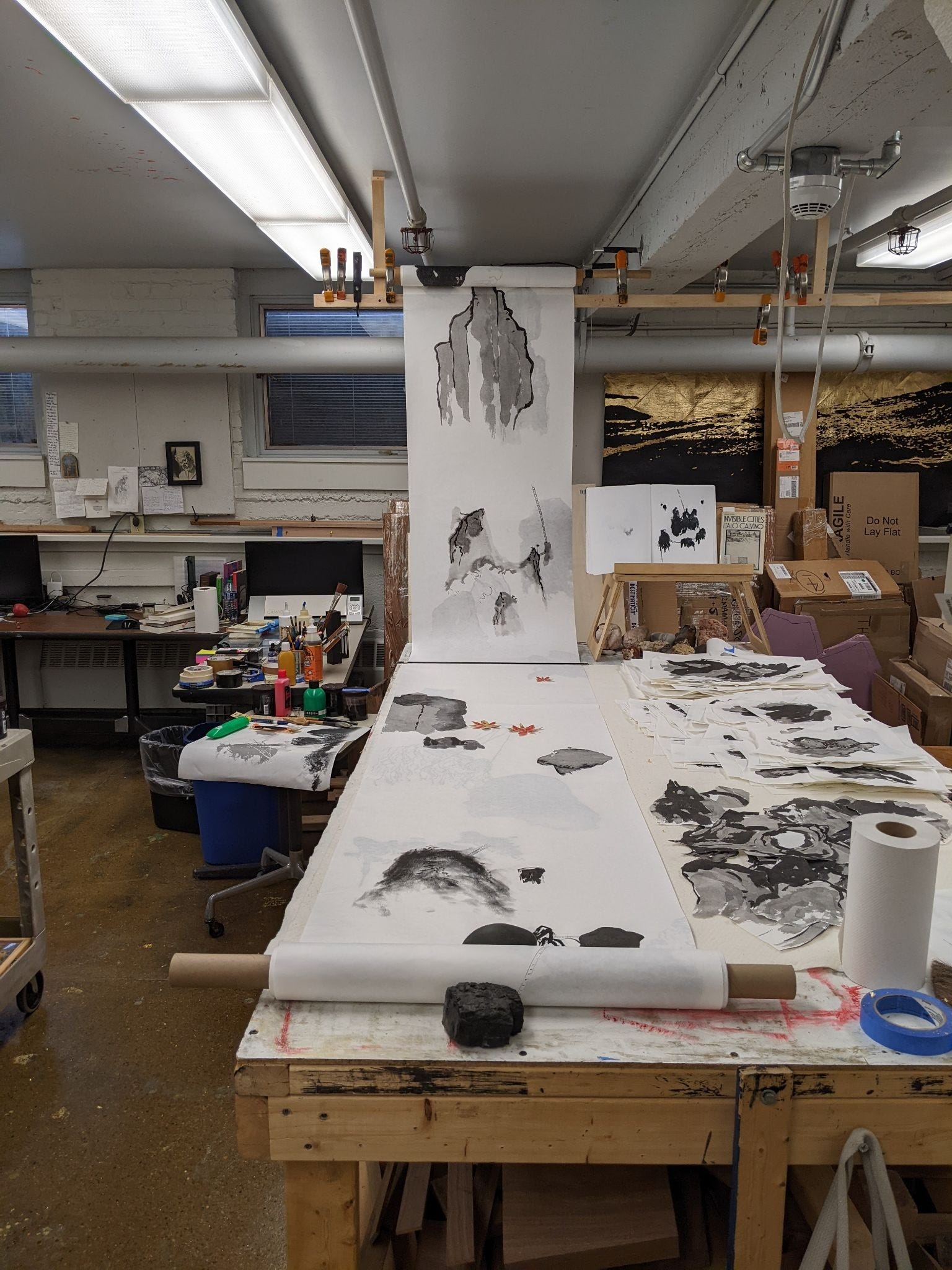
As I pack up and leave this particular studio, I’ve been pondering what a studio is to me and how my practice has changed over the years.
My studio has been a place of exploration and wrestling in a pool of materials. I have had exhibitions about Communing with Silence, the Seeds of Contemplation, and trying to pull Water from a Stone. I have made pieces about prayer, meditation, Jacob and the angel, and weathering storms. My practice has not revolved around a single medium, it has revolved around my creative contemplation of the life of faith.
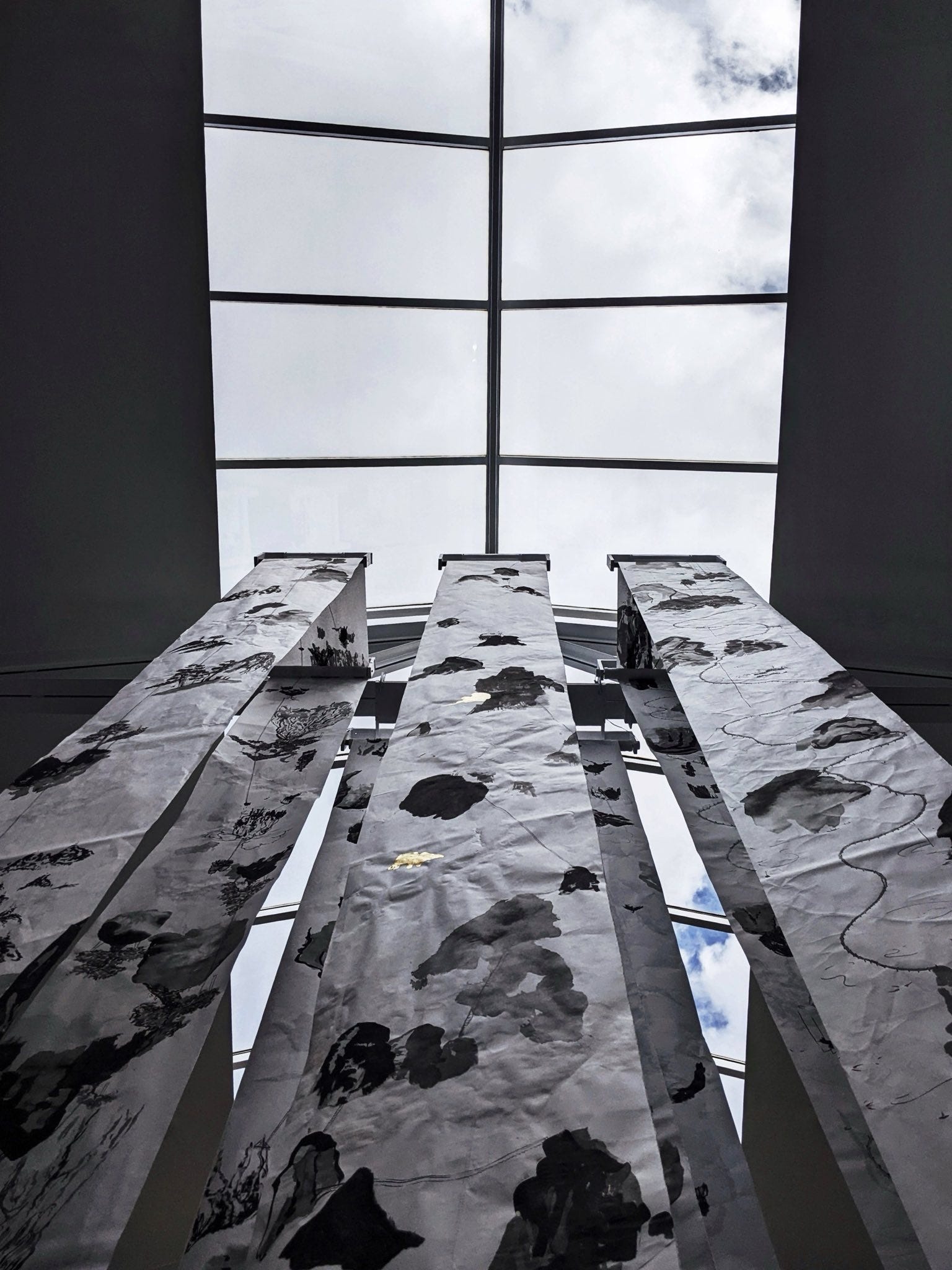
This studio has been a place where I worked on big things. Where I put tables on wheels and shifted everything around to suit whatever project I was working on. The setup pictured above was how I made the 50 foot long drawings which became Floating Up and In displayed in Western Theological Seminary’s atrium:
Floating Up and In, 2024
As the day of vacating this space approaches, friends have asked me how my practice has changed.
In the past year I’ve hardly set foot in the studio, let alone worked on art in there because I could not stand being on campus. Last summer I spent my time in the backyard carving icons for my home, which was the first time I have made art solely for my family. (I would insert a photo, but I don’t want to. You will have to come visit us if you want to see them!) Because of my reluctance to be on Hope College’s campus, much of my creativity has been funnelled into these writings. Although the large scale piece I exhibited at George Fox University this past spring took on a lot of the frustrations and sadness of leaving this studio, and higher ed, and funnelled the imagery through dark clouds:
Shadows of Things On High, 2026
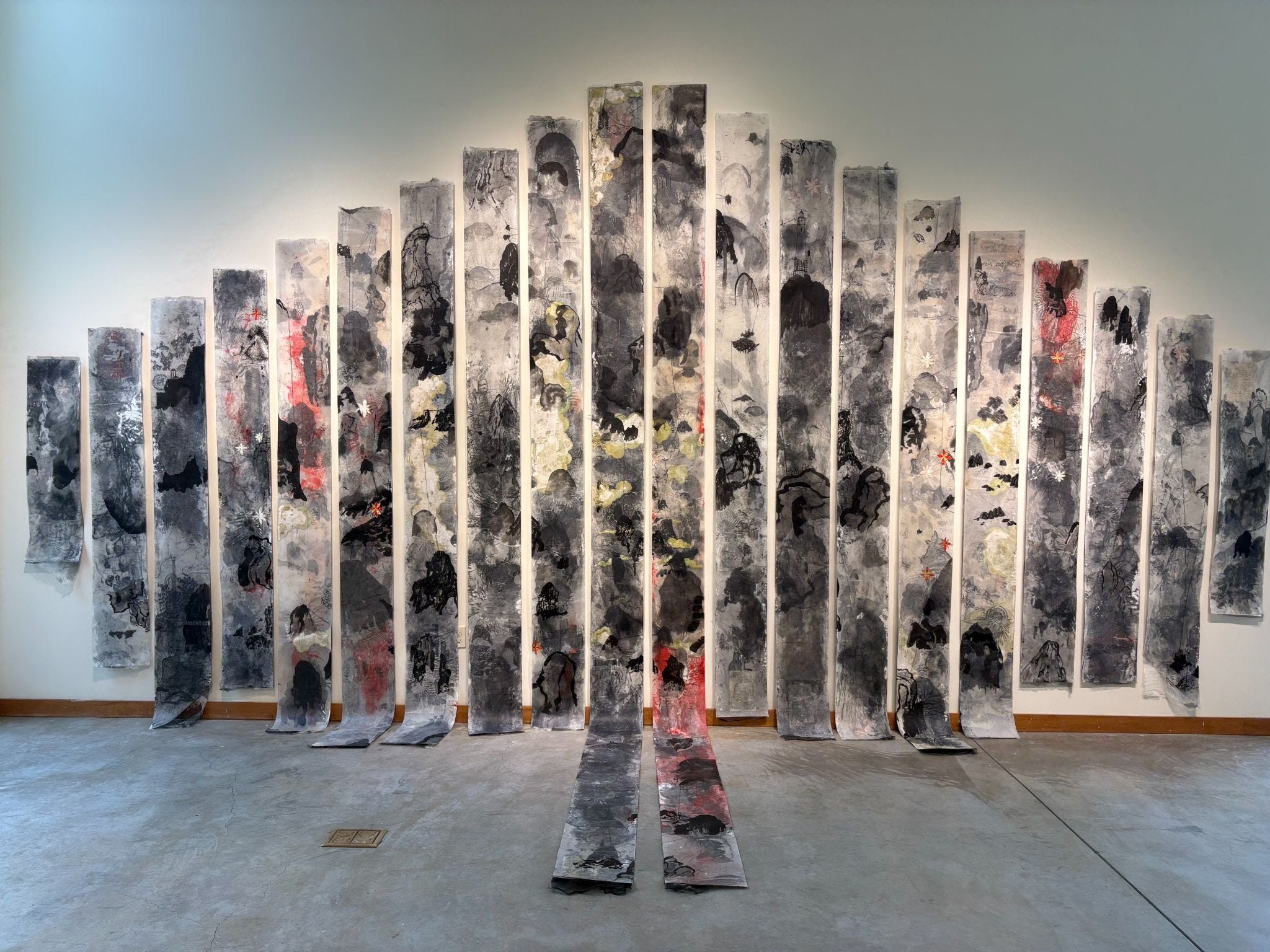
I had to make this piece in the studio because of the scale.
Now I am sitting at home, with a folding lap-desk I made specifically to fit my chair, drawing clouds. Or hunched in a pew. Or sitting in the sun. There has been another change beside scale: I am no longer trying to justify my work conceptually. I’m not against the conceptual justification — as my writing here has obviously proclaimed in many ways. But there is something strange about justifying your work as the artist.
In fact, this is the primary thing a student learns in art school: artspeak. The lingo. The ways to contextualize and justify the conceptual bonafides of your work. To prove you’re smart and understand how your art is relevant right now.
I think the justification can only rightly happen once the work leaves the studio. Just look back to the archetypal artist most artists aspire to become:
Self-Portrait, 1889
By Vincent Van Gogh
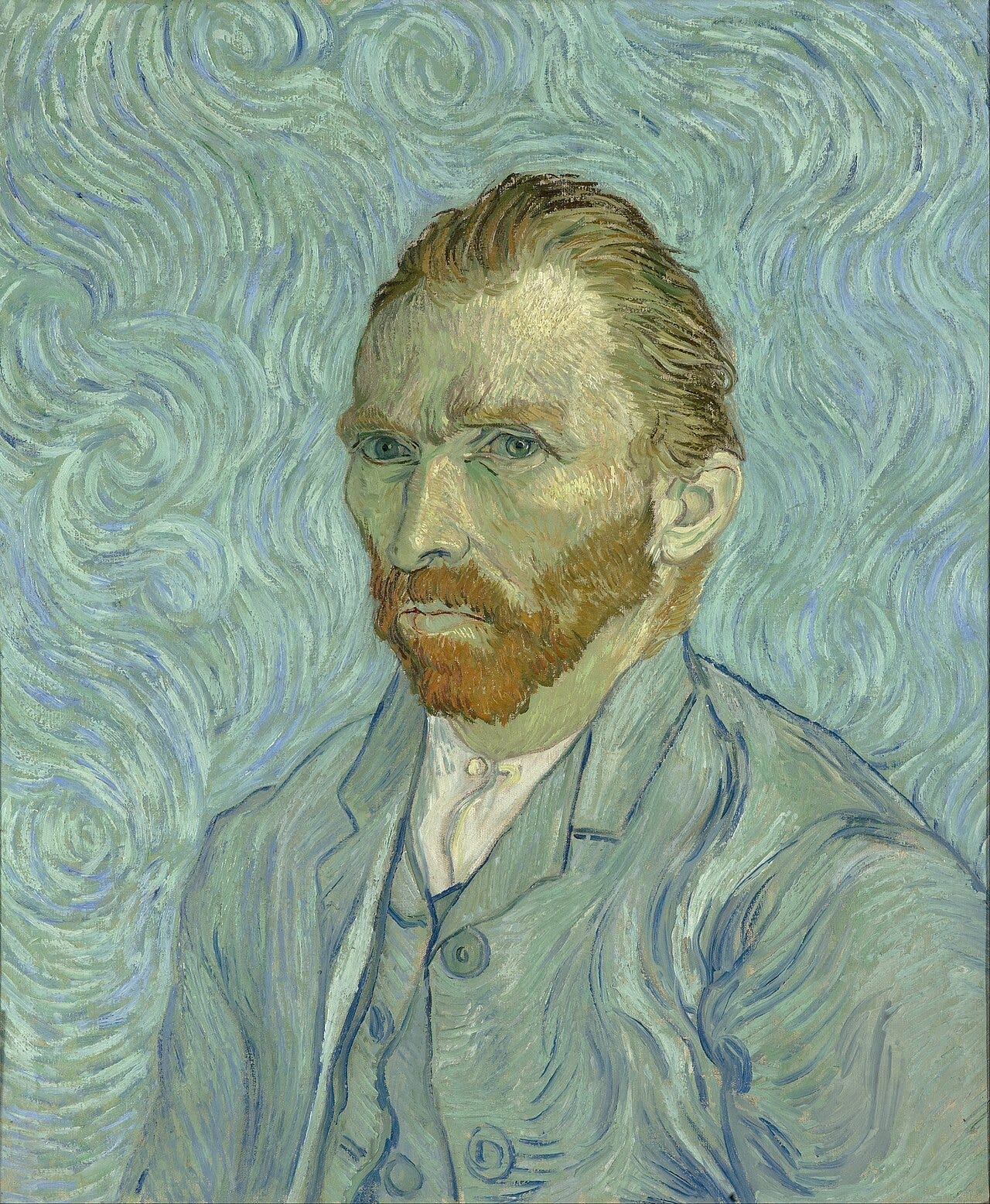
His life was a constant struggle of trying to explain and justify his work, only to utterly fail. Yet, his work succeeded to capture and captivate audiences only a few years after his death.
I don’t mean to push the romantic notion of genius artists destined to be misunderstood. Rather, I use this to illustrate: the work is best understood outside the studio by audiences instead of by the artists in their studios.
I am tired of acting like it’s my job to figure out my artwork’s ultimate meaning. If I could do that, I think I would just write 140 character long proclamations of the truth instead of drawing or sculpting or sticking my feet in buckets of honey and walking around.
I think artists need to focus more on making without so much explaining. I think they should follow the tug in their chest toward subjects and materials and tools. I think they should be less concerned with what an artwork might mean, and more concerned with what they might discover in a new process.
We should air out the laundry in our studios and in our minds:
High Places #61 (detail), 2026
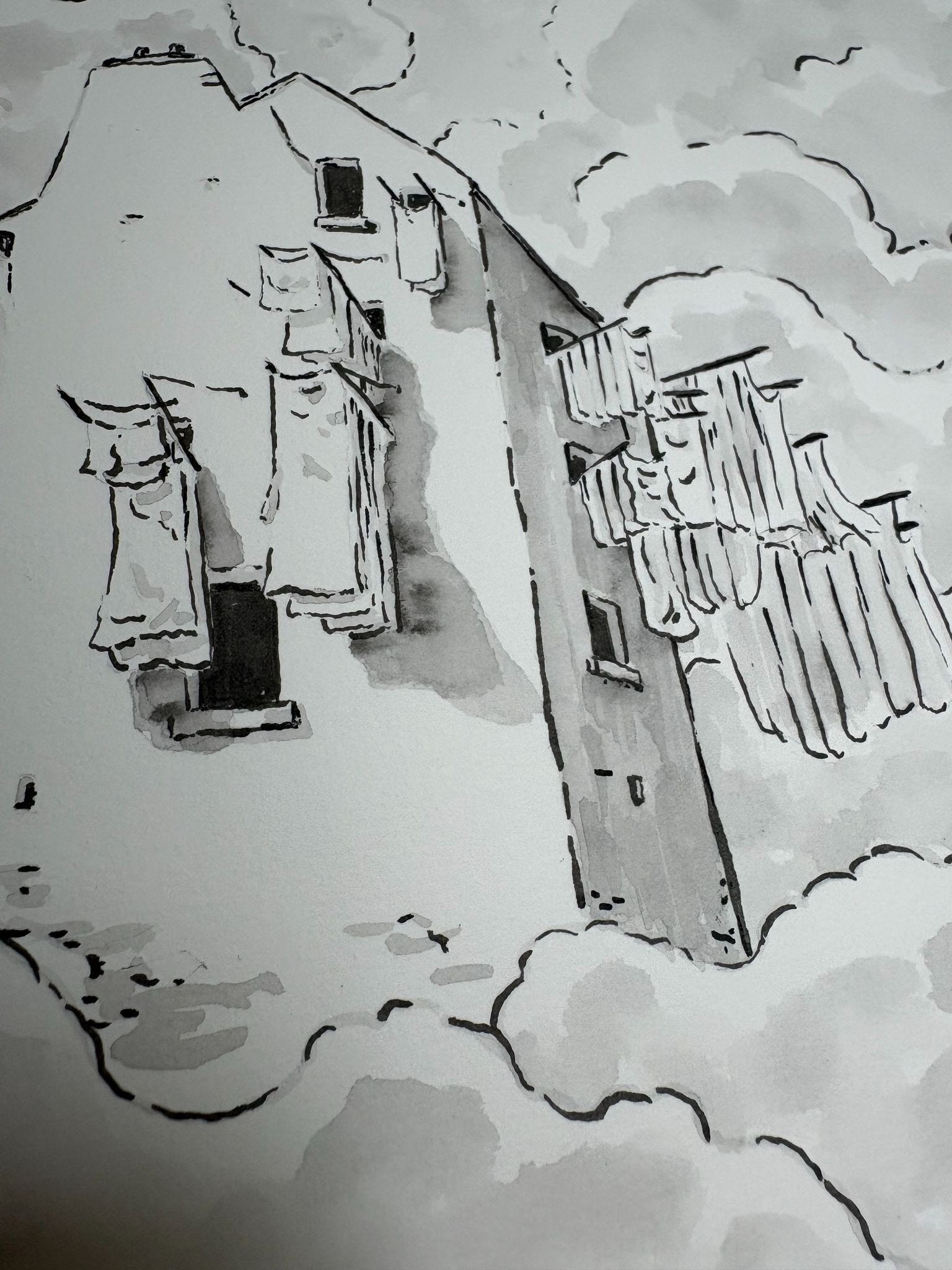
A friend told me, “Being in your studio is like being inside your brain.” Spring cleaning was certainly in order.
How has my practice changed? I am less frantic. I am seeking less approval. I am more intentionally following where the Spirit leads me. Can you see the changes in the work? Probably not much. The imagery remains. The materials remain. My practices in the studio are the same, albeit adapted to a much smaller work surface.
The big change is my posture. I am no longer afraid my work might not merit tenure. In the studio, I have felt this as less of failure and more of a freedom. I have asked myself, “what was the point of striving in this way? What was the point of the countless hours in the studio? The emails and committee meetings?”
The point was academic justification in order to keep my job. That weight has slipped away. It’s been replaced by sitting outside with the birds.1
So, what’s next? Continue making art and keep following the path.
Onward and upward then!
There was a turkey vulture on the neighbors roof yesterday. He was eyeing the rabbit carcass in our yard three crows were picking at. Which reminds me of one of my favorite metaphors: artists are culture vultures. Like the crows, artists go for the eyes first.
Cheering you on!
I'm doing the same. Time to get rid of the clutter. Looking forward to the next chapter.