


One of the strange yet poignant gestures during Lent is covering images of Christ and crosses with veils. In my church this includes a purple hood over the cross, which an acolyte carries in and out of the sanctuary. It reminds me of the hood kidnappers use in all the movies — where do all the kidnappers get them? The veil for our cross was made by a mother in the church. Am I to believe the movie kidnappers’ mothers are sewing up bags for their nappings?
I will chalk-it-up to “movie magic” and return my attention to veils. The veils of Lent are similar to mourning veils.
Study of a Mourning Woman, 1505
by Michelangelo
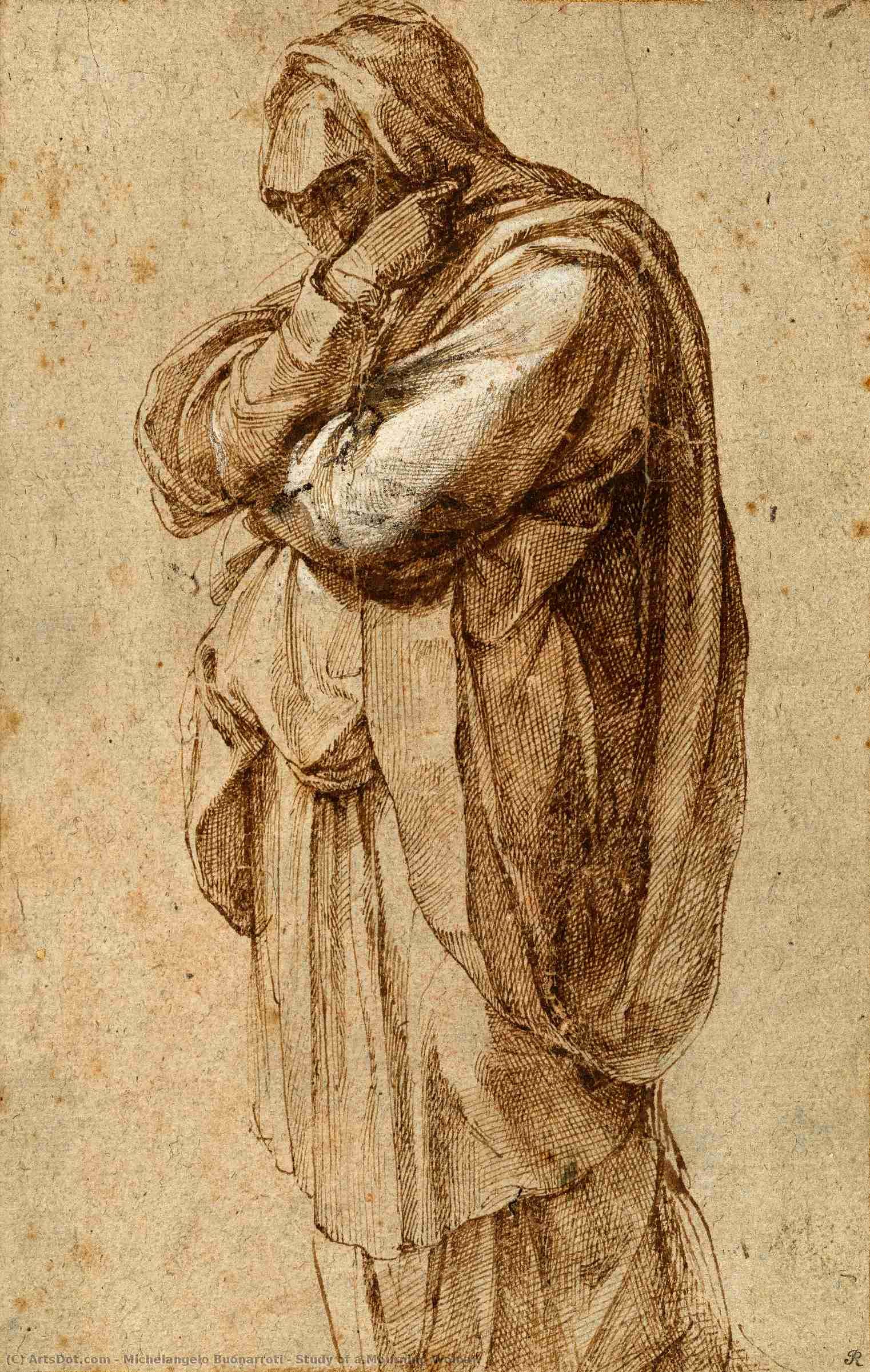
The function of the veil is to hide the face of the mourner, it serves as a privacy screen allowing others to be sensitive to their private woes.
The Lenten veils are not there to cover a mourner though. Instead, they are there to remind us: we are all mourners. The veil hides but it also draws attention to whatever has been veiled. The Victorians understood the double function of the veil: traditionally a widow was to dress in black with a veil for an entire year after the death of her husband. This practice was spoken of as “the trap re-baited.”1
The veiled object stands out from the crowd. It’s concealed but in another way it’s revealed. This is why romantic restaurants are usually full of shadows rather than the fluorescent lights of a cafeteria. The veil often causes us to look at the contours of the face instead of at the eyes. It causes us to see the form of whatever is veiled. Like this:
Wrapped Trees, 1997-98
by Christo and Jeanne-Claude
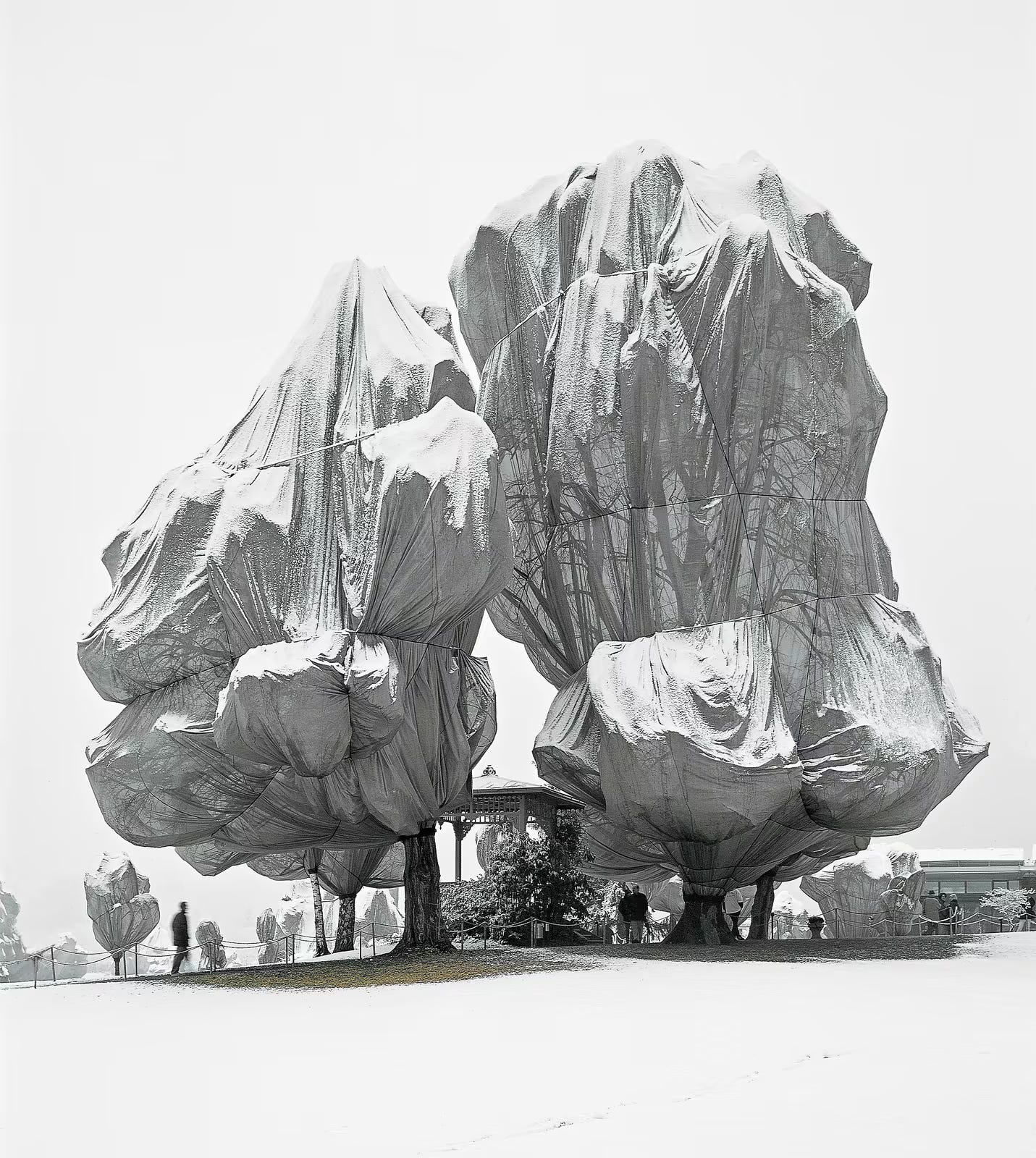
Without the scrim veil these two trees would blend into a mass of branches. Instead we see how they have grown to both fit together and spread apart. Notice how the right hand tree leans over and toward the smaller tree on the left. The tree on the left is branchless on the right hand side of its trunk.
Christo and Jeanne-Claude are masters of the veil. They have hidden the L’Arc de Triomphe:
L’Arc de Triomphe, Wrapped, 1961-20212
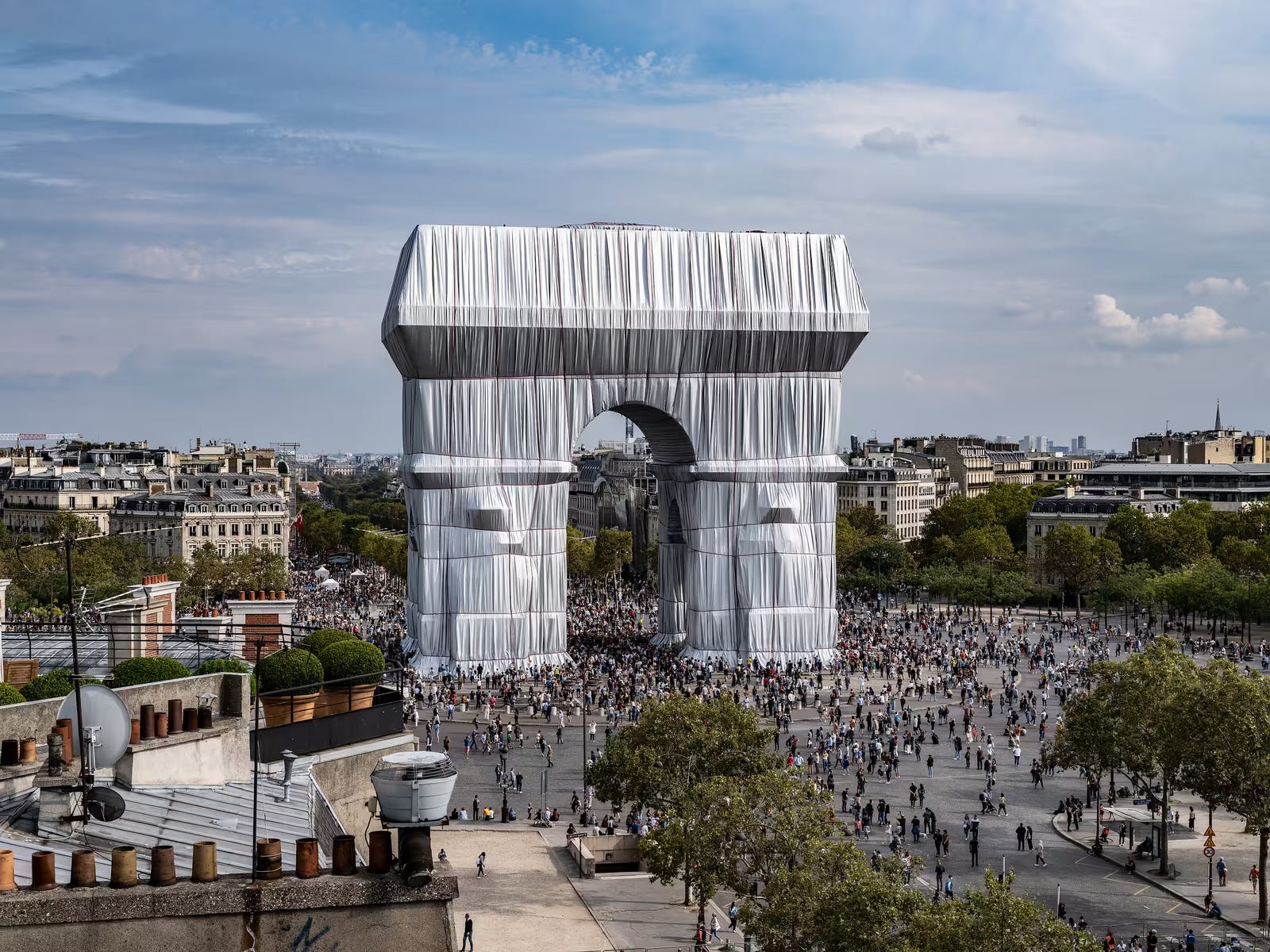
Their work highlights by hiding.
This is my favorite image of the trees:
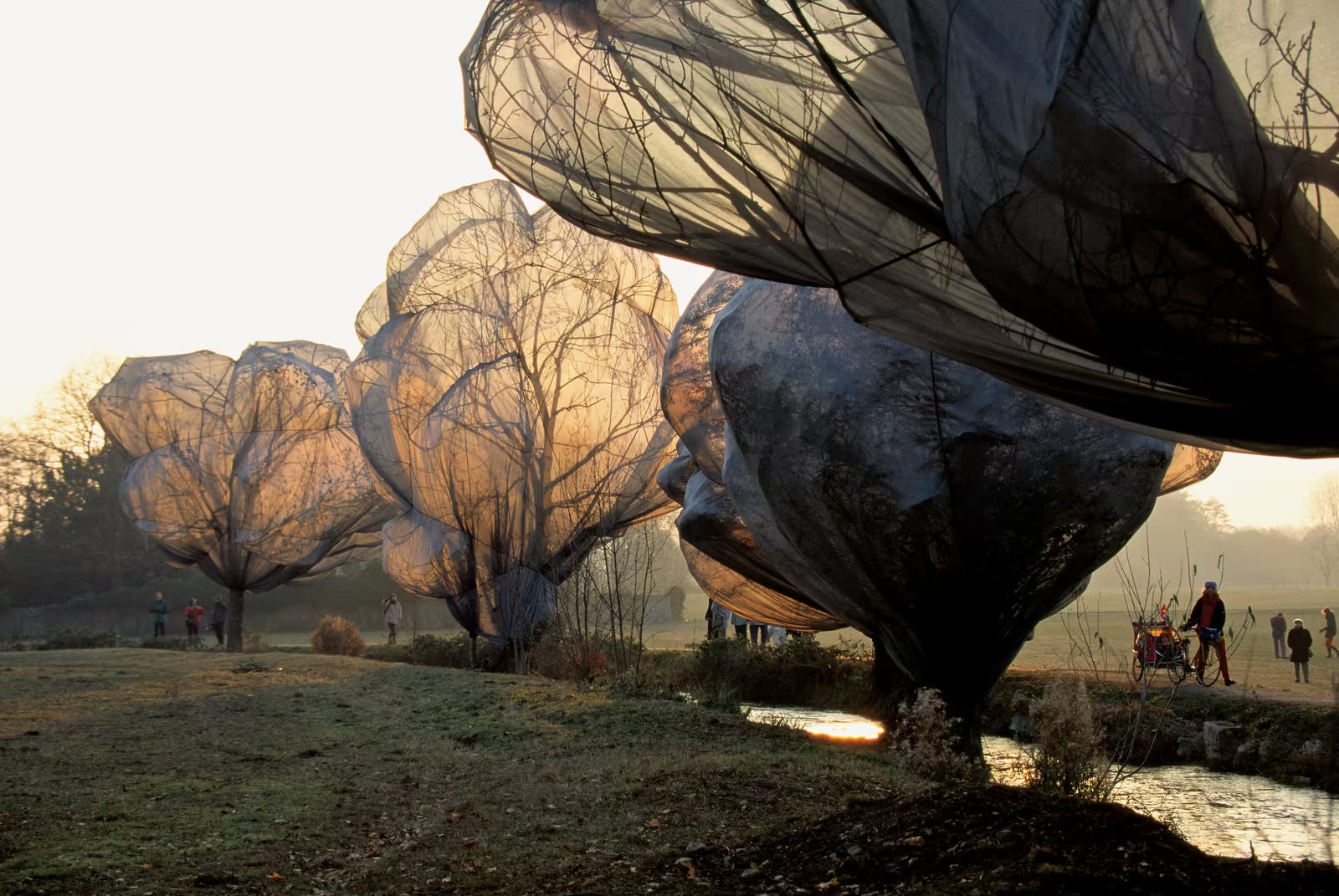
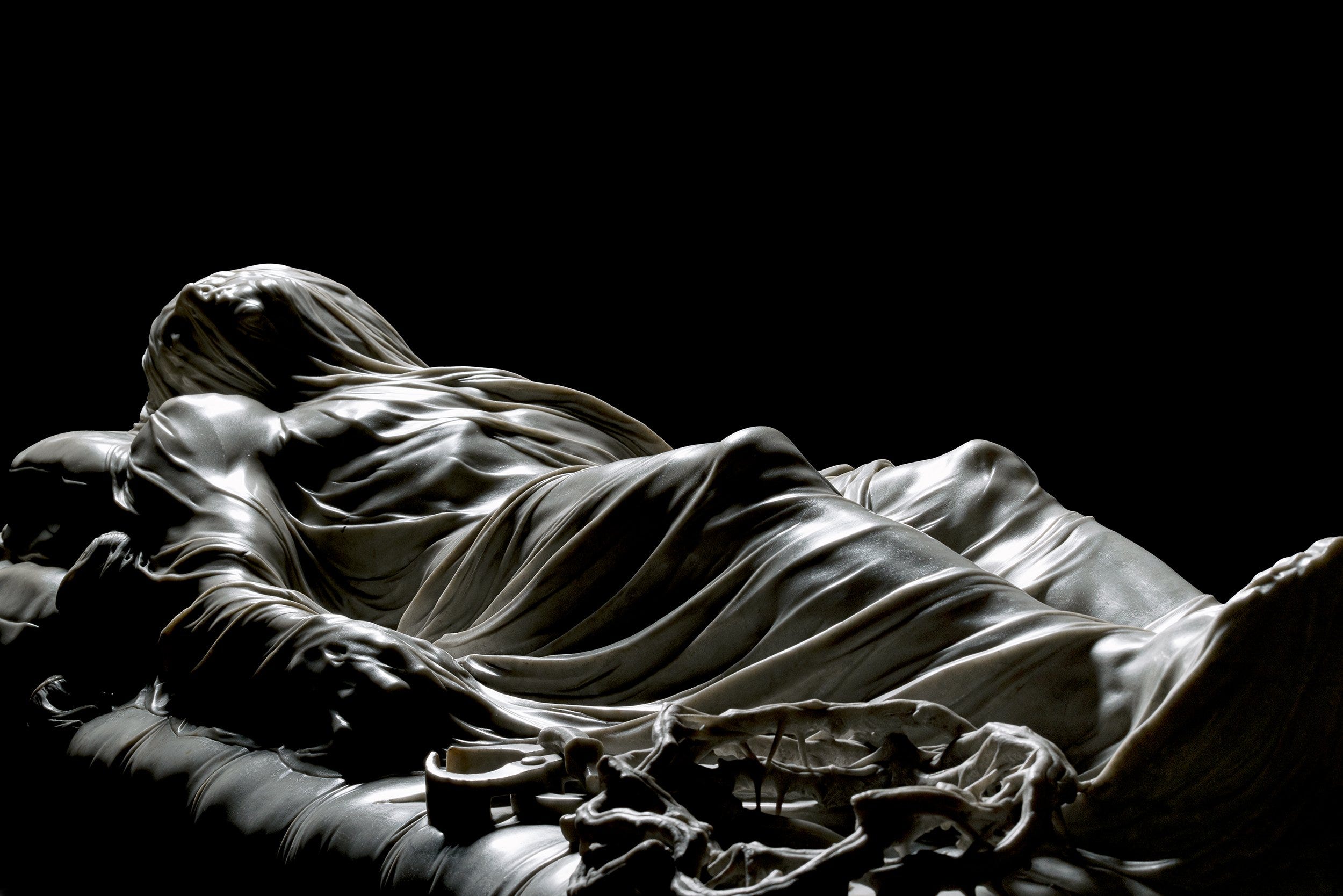
The veil makes us take stock of the thing as a whole. Which reminds me of funeral veils — not mourning veils worn by women. The veils put over a corpse:
Veiled Christ, 1753
by Giuseppe Sanmartino
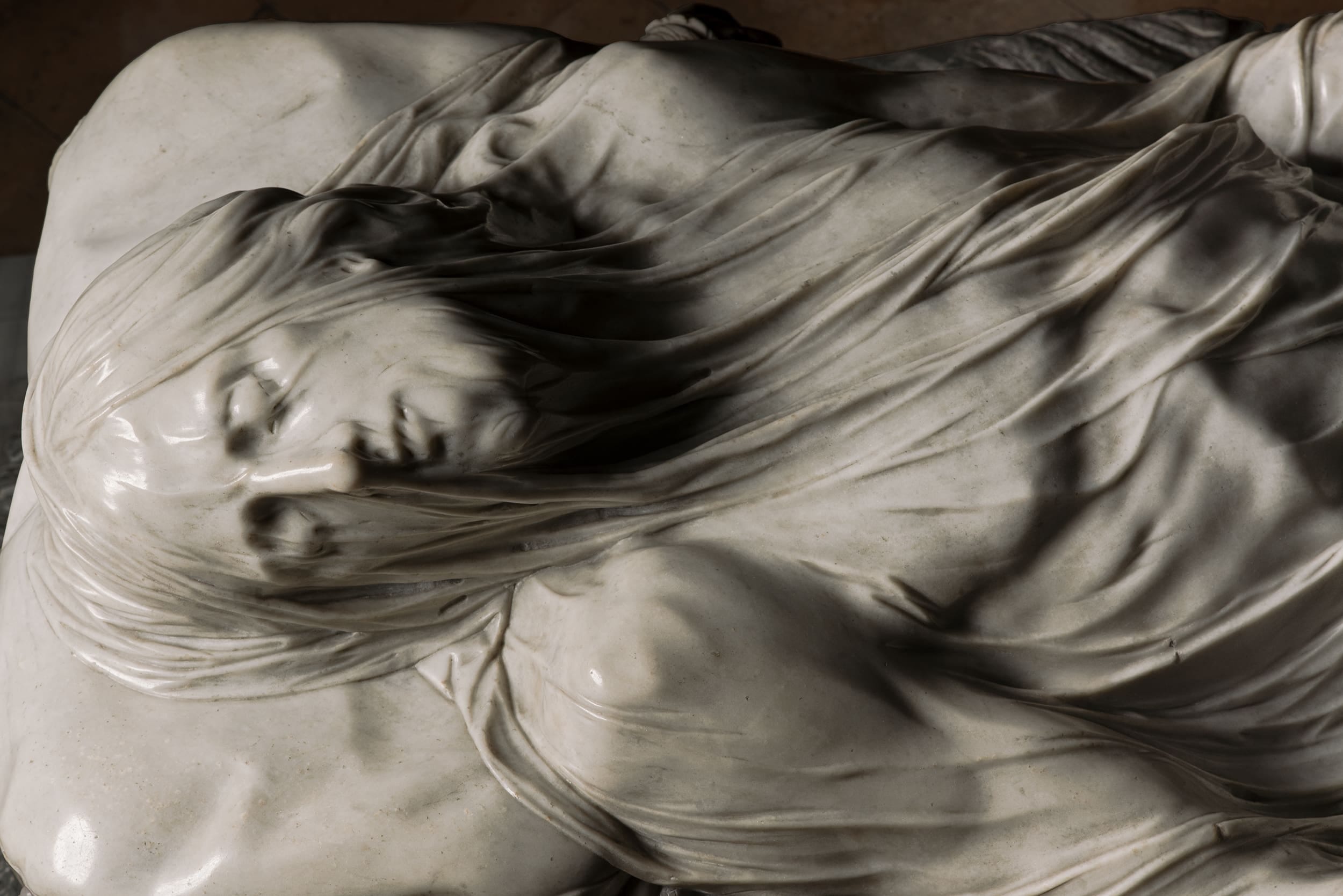
The funeral veil shrouds the body. The details blur, especially in Sanmartino’s sculpture, and we begin to see the general shape of the person. We no longer gaze on the living face but rather see the body mixed with the flowing fluidity of the veil. Sanmartino’s skill is incredible! The funeral veil directs us away from the body and towards a remembrance of the lost one’s life.
All of these veils remind me of the verse in First Corinthians, “For now we see through a glass, darkly; but then face to face: now I know in part; but then shall I know even as also I am known.”
My eyes are drawn to that which is hidden. The familiar face, the overlooked tree, the corpse, even the cross in church whose presence is assumed more than noticed. We take so much for granted. The gesture of the veil hides for a time so I might truly see once again, after the veil is lifted.
In case you aren’t picking up what the snarky Victorians were putting down: the all black outfit complete with veil was attractive. The trap of seduction/marriage was reset.
A note on how Christo and Jeanne-Claude date their work: each piece spans from the initial ideation until the completion. Most of the wrapped works only last a few days but the true work of art is all of the red tape they must cut through to create these brief moments.